Kill Brother, Kill Sister: Episode Six
Podcast: Episode Six – Closer to Home
Apple Podcasts: Episode Six – Closer to Home
Schedule: Tuesday, Thursday
The first few “persons of interest” in Muriel’s murder can be roughly placed in the “speculative” bucket. Even, you might say, the deeply speculative bucket. As in… One by one, most of these folks were eliminated (or eliminated themselves) from consideration. Donnie Wayne Pitts? Nope. He was big talk, but under pressure, even the slightest trace of pressure, his story collapsed. His story had no home.
Attorney Karl Johnstone? State prosecutors ultimately dug up a counterfactual: Karl Johnstone did not, in fact, assert that the bomb was intended for him. Rather, he’d duly noted his antagonism to pro-labor groups in Alaska. Had, in fact, gone up against powerful Teamster interests in the State. Did confirm that his car was parked in the same lot. The rest of the story – that he was a bomb target – was another conjectural. And, of course, there was this: Johnstone was on a quick path to becoming a Judge. Under the circumstances, it was perhaps better for him to stay away from such hot button issues. Not that it ever came into play… But, yes, he did get the judgeship.
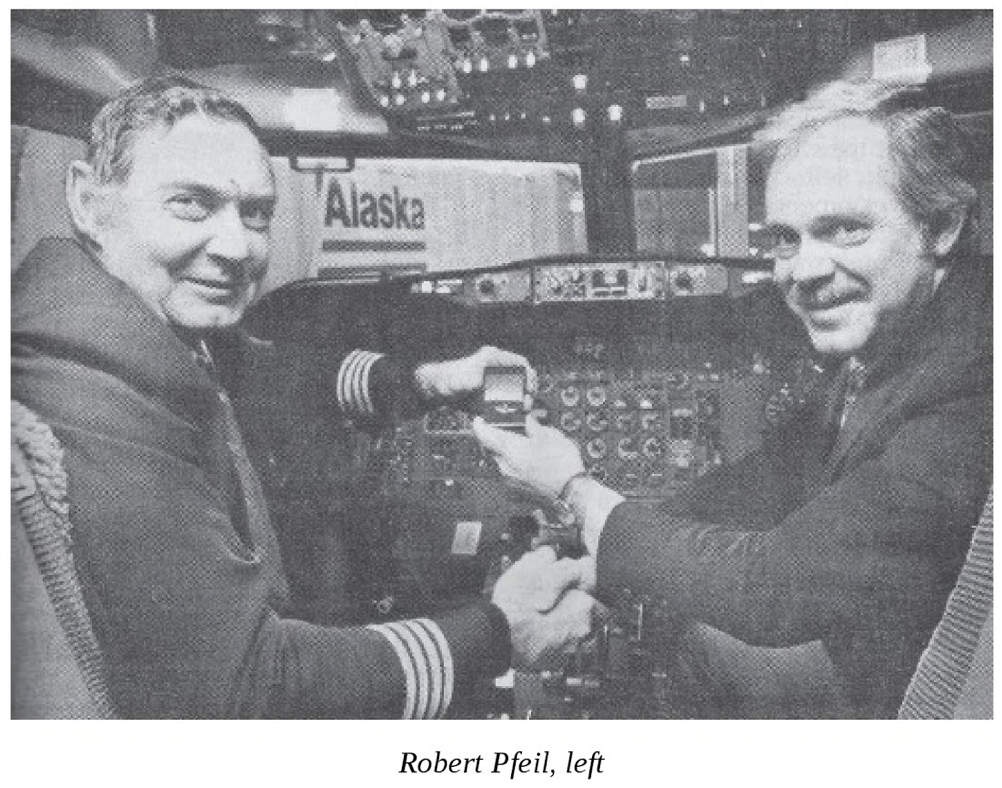
Equally conjectural was speculation that the actual bomb target was Robert Pfeil – Muriel’s brother. It was said that he sometimes drove Muriel’s car and – more important, it seemed – he’d been involved in union activity focused on labor strikes involving his employer. That employer being Alaska Airlines, for whom he was a senior pilot – you may recall he was employee number thirteen. Once again, some folks in the community were swinging for the fences. Union activity? Always an appealing target. You can do that one without even thinking.
Slow Road Home
Which leads us down another road… What about the journalist working on the Fairbanks Teamsters story? Well, she reconsidered her original assessment. Her Volvo, she noted, was older, was a different color – and she parked all over that lot. Muriel’s car, on the other hand… Just that bright orange one, parked only in that one spot. The scene of her murder. But the journalist was right in her other assessment… There was something about Fairbanks.
As the Fairbanks Daily News Miner reported on September 13, 1976, two hundred fifty pounds of dynamite, which was stolen the previous June, was discovered in brush near Mile 24 of the Trans-Alaska Pipeline. The explosives and 4,000 feet of fuses were found intact by two bulldozer operators, and… The theft touched off an extensive search. Alyeska officials confirmed at the time that if the dynamite fell into the wrong hands it might have posed a threat to pipeline construction. Not to mention humans.
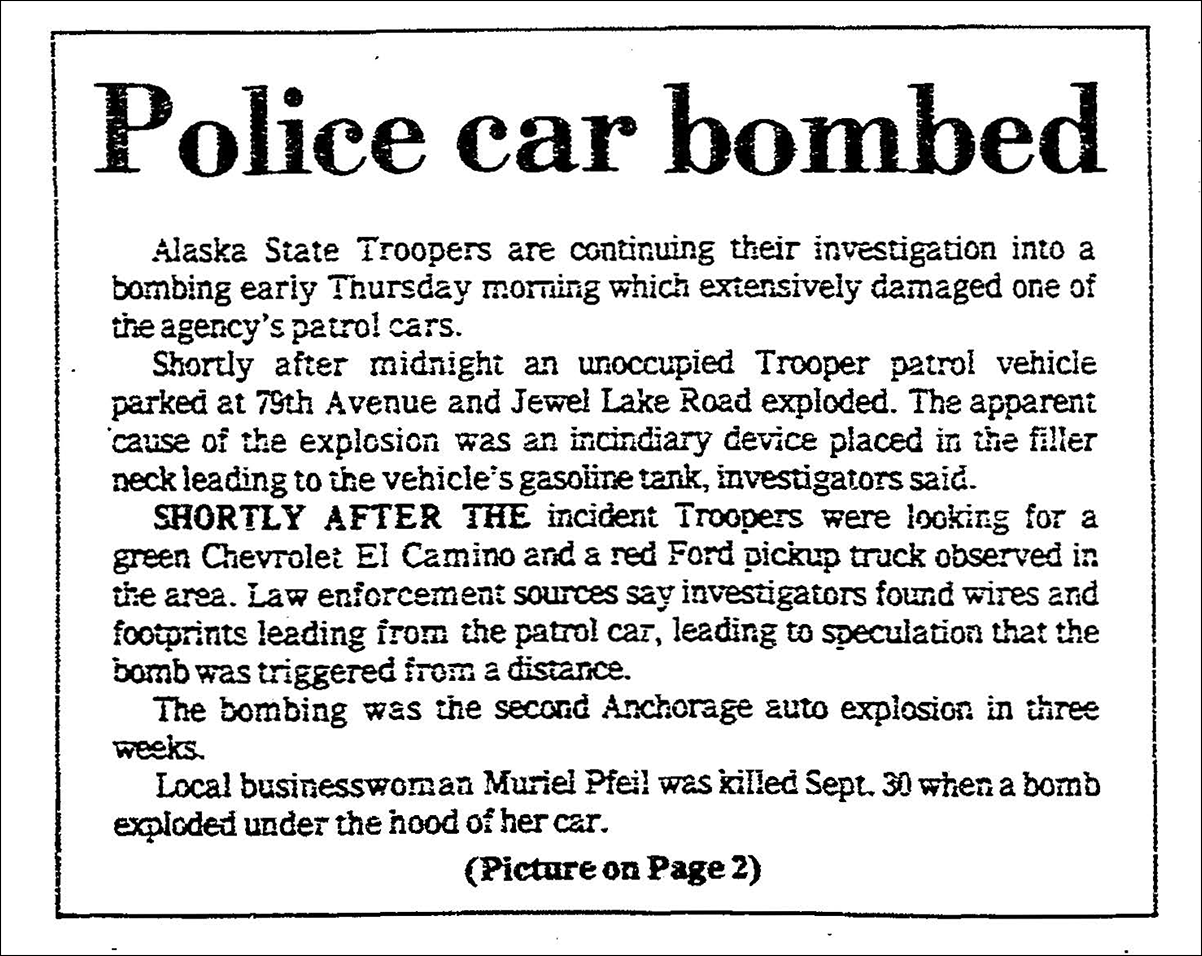
(October 22, 1976)
Dynamite + More Bombs
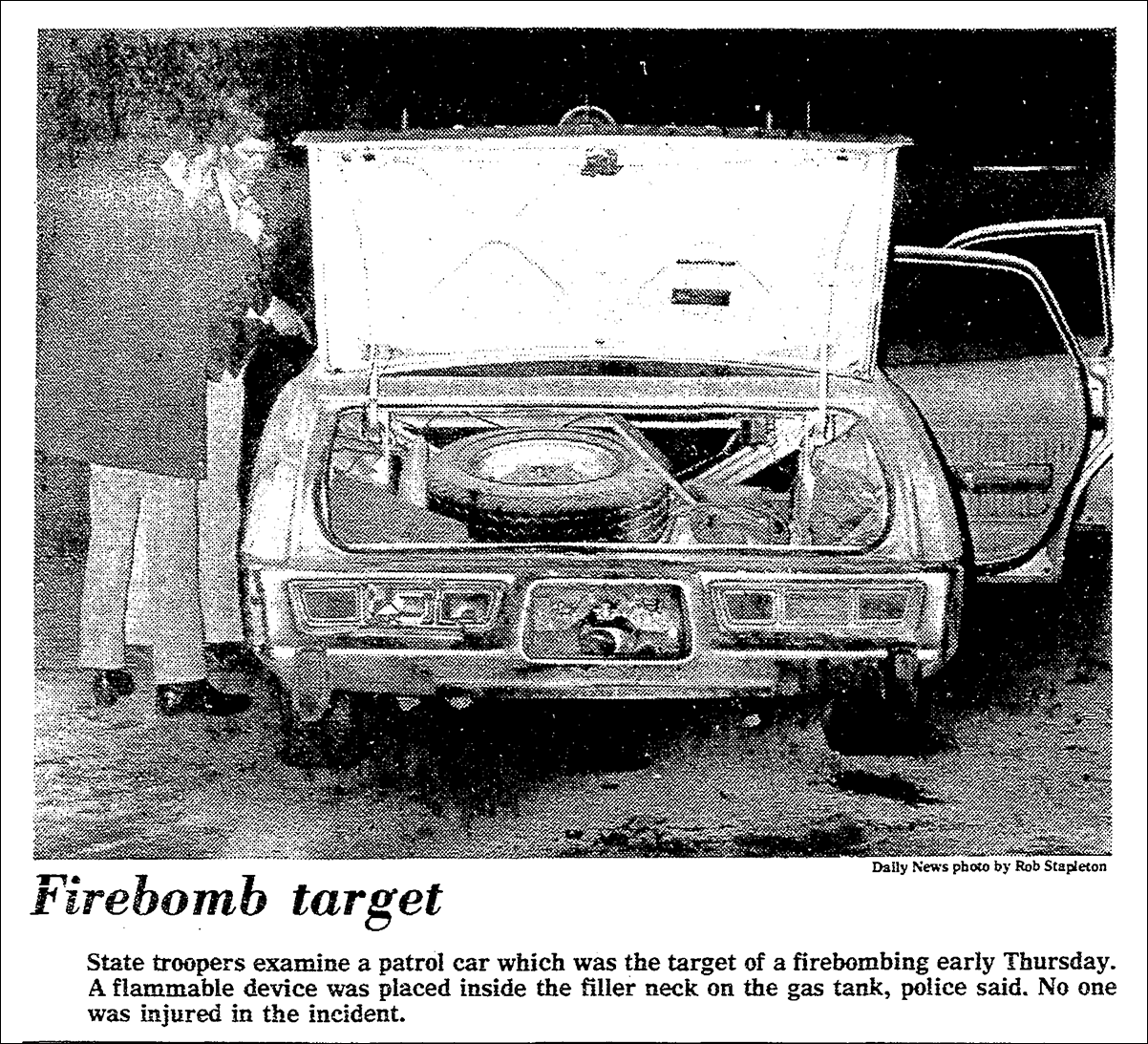
And then… On October 22, 1976, less than a month after Muriel’s bomb, another car bomb explosion hit Anchorage… This one about a mile from Robert Pfeil’s home — Muriel’s brother — somebody placed an incendiary device in the filler neck of an unoccupied Alaska State Trooper patrol car… Investigators found wires and footprints leading to the vehicle. This was a remote detonation. Exactly what police feared.
And then another one, back in Fairbanks… By mid-November of 1977, another abandoned vehicle was destroyed by an explosion. The wrecked vehicle had been left alongside the road when it was bombed at 1:30 a.m. on a Sunday morning. Troopers in Fairbanks were investigating what was now the second successive car bombing in Fairbanks.
An exhausted Police Lt. Ralph Christianson, of the Anchorage police, compared the characteristics of the two Fairbanks bombings, and reluctantly noted, “The only real similarities are that both vehicles were station wagons, and they were both bombed.”
The Fairbanks – Anchorage Connection
Lt. Christianson confirmed that four investigators were working fulltime on the case and that interviews of possible witnesses continued. The officer added that his agency has been going through travel manifests between Fairbanks and Anchorage. They were looking for possible suspects. “We’re also considering using a polygraph to test certain people who may be involved,” Christianson said. He declined to name any possible suspects.
They weren’t ignoring Anchorage.
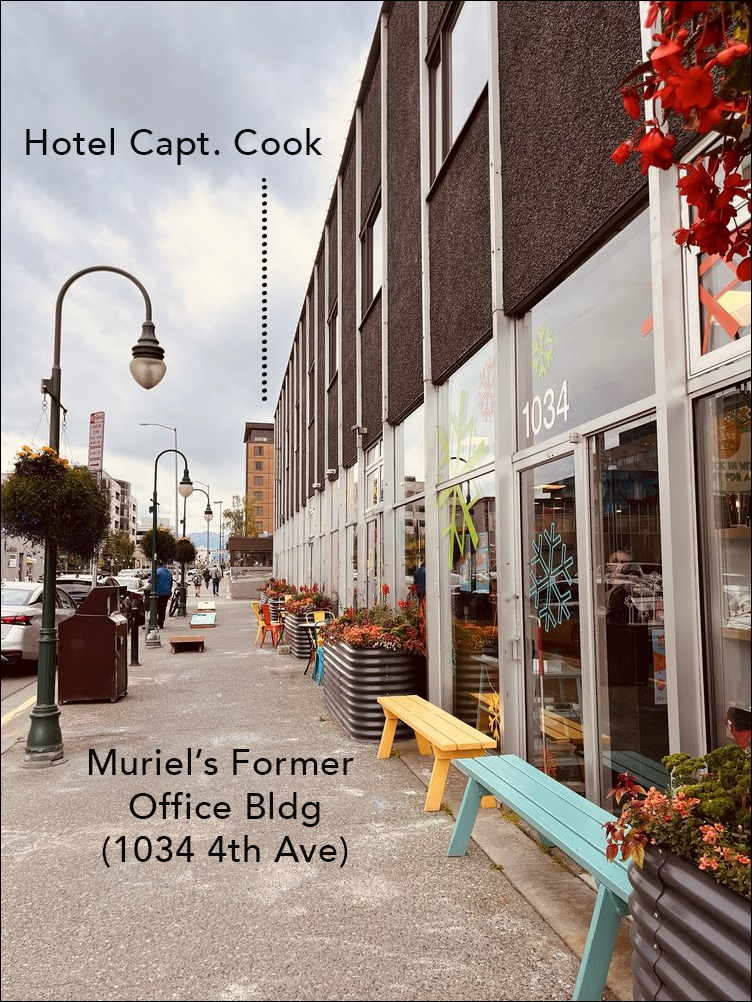
(Capt. Cook Hotel, background)
“We’re still interviewing possible witnesses,” in Anchorage, Christianson said. That was because, besides the businesspeople located in the area surrounding the parking lot, many windows of the Captain Cook Hotel, located a short distance away, overlooked the bomb site. “We’re still tracking many of those people down,” he said. Other investigators were still sifting through evidence, much of that at a secure Anchorage Police garage.
That wasn’t all. APD investigators were searching other nearby office buildings, attempting to locate any transmitter that could have triggered the blast. One team was seen searching closets in the Carr-Gottstein Building less than a block from the blast. Why? Because offices in the building would have provided a clear view of Muriel’s Volvo and her office.
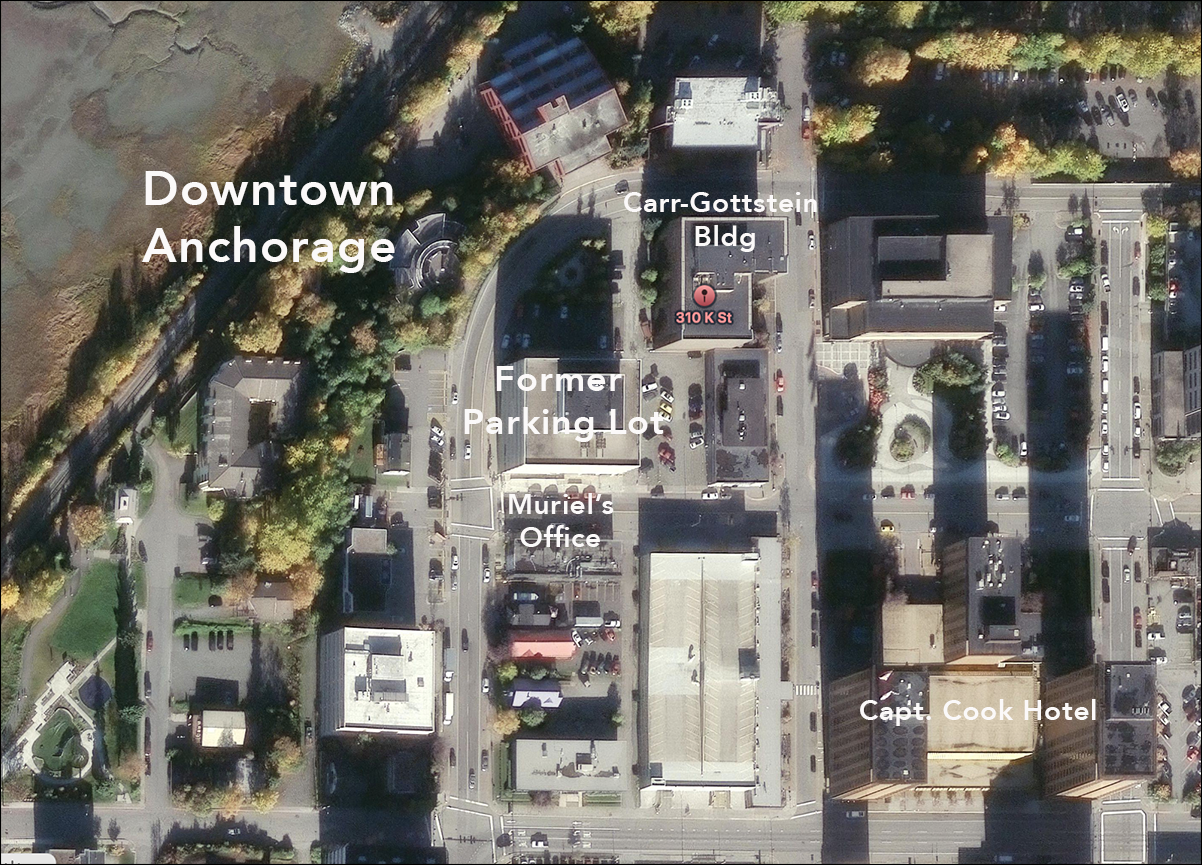
And so it went. Indeed, there were some interesting leads coming in. Not all of them local. Or even that close to home.
The War Criminal
With witnesses coming in from everywhere, one who quickly came forward was a friend of Muriel Pfeil. She revealed that Muriel had told of her of someone she’d befriended during her European travels. His name was Joachim Peiper. She’d met him in Germany — in Stuttgart to be exact — while she was studying abroad. A Volkswagen executive, he’d helped Muriel and sister Caroline get a car so they could take advantage of Europe’s premier ski slopes.
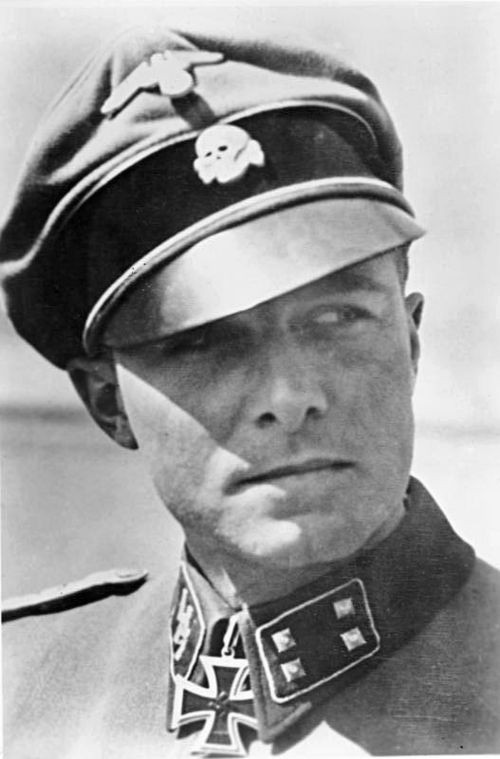
Formerly a lieutenant colonel in an armored division of the Waffen SS during the Second World War — we’re talking full on Hitler stuff here — Peiper was ultimately held responsible for a massacre of American soldiers during the Battle of the Bulge. On 17 December 1944, Peiper’s armored battalion encountered a convoy of 30 American vehicles near Malmedy, Belgium. The American Battalion was quickly overcome and captured – then ordered to stand in a meadow before the Germans opened fire on them with machine guns. Eighty-four soldiers were killed. Their bodies left in the snow. It was characteristic, apparently, of Peiper’s aggressive style of command. So… At war’s end, Peiper was put on trial before a military tribunal… And convicted as a war criminal.
Yes, he was ultimately “cleared” by the Americans because there was insufficient evidence that he gave the order to open fire. And when, years later, Muriel revealed the Peiper relationship, her friend felt compelled to inform her of Peiper’s horrific background. A background to which Muriel seemed oblivious. But that wasn’t the nugget.
During the summer of 1976, Joachim Peiper was residing in a lodge in France. Townspeople, having previously learned his identity, warned him to leave. He refused. And so on Bastille Day, July 14, 1976, he was murdered when his lodge was blown up by what some characterized as a “high velocity explosive.” [Except the details are incorrect – Peiper’s house was fire-bombed. It was Muriel Pfeil who was killed by an explosive device.]
Less than two months later, on September 30, 1976, Muriel Pfeil was murdered in Anchorage. Were they related?
The Book: Kill Brother, Kill Sister
Kill Brother, Kill Sister is available at Amazon, Barnes & Noble and other fine bookstores (paperback and ebook).
Copyright Leland E. Hale (2026)