Kill Brother, Kill Sister: Episode Four
Podcast: Episode Four – Star Cursed Love
Apple Podcasts: Episode Four – Star Cursed Love
Schedule: Tuesday, Thursday
There were always questions about Muriel Pfeil’s marriage to Neil Mackay – and let’s admit that poets, painters and philosophers have all tried – and mostly failed — to explain love or lovers. And trust me, there were lots of inexplicables about these two. The age difference, for one. She was 33 when they married; he was 45. A twelve-year gap. Let’s put that in different terms: He participated in World War II while she watched it from grade school.
Now, maybe that’s not an impossible difference. Her own parents were separated by thirteen years. So yeah, she had an example. But often – perhaps too often – what we see is an older, successful man who wants nothing more than a trophy wife. Someone who makes him look good. And, as far as I can tell, there was nothing about Muriel Pfeil that wanted to be a trophy wife.
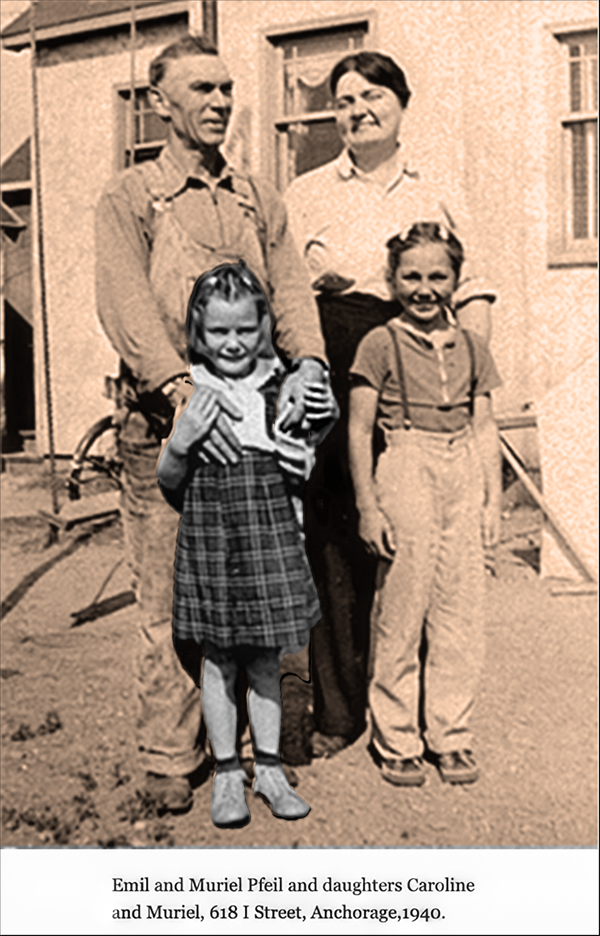
(sister Caroline, right)
In fact, my most profound sense is that she wanted a marriage of equals. That’s what she experienced in her own life, seeing the relationship of respect between her parents. Her mother was a school teacher who became a school principal. Her father worked his way up from hard-working immigrant to prominent citizen: member of the city council; owner of land, apartments and a downtown department store.
So Muriel had, I don’t know if I want to say expectations, but she had lofty examples of the kind of love relationship she wanted.
Something Else, Love
But maybe there was something else? Something more fundamental. Like, opposites attract… Or maybe the hard charger mentality that they shared? And then there was the “wouldn’t we be the power couple of all power couples” angle. Mackay was the lawyer and entrepreneur. She was the queen of the travel business. The gossip alone could pay dividends.
So, in that context, let’s not put the age difference too high in the equation. Let’s instead look at who Muriel Pfeil was, because there was something about this woman.
Muriel Pfeil made Neil Mackay think that he was a different person than he really was.
Muriel had social savvy and sophistication in a town still rough around the edges. And nested within that is the notion that it’s Muriel who holds the power of love and attraction. And it’s she who wants, requests — requires — control of her own destiny. We know this because… Her life before Neil Mackay provides absolute proof.
In The News…
Unlike most of us, we can track major portions of Muriel’s life story through newspaper mentions. Her parents were already in the society pages, so it was not much of a stretch. It isn’t a slender record, either, so it’s a good place to start. Between 1951 and 1953 alone – her high school years – she featured, one way or another, in thirty separate stories and/or news bits.
We learn, for example, that she was a very good skier, a fast skier, usually number one in her competitions. In1951, she was also the local star in a, quote, “lavish skating show featuring professional performers.” Two years later, she took a job at the Sun Valley Ski Resort in Idaho, as part of an outdoor skating exhibition. You get the drift…
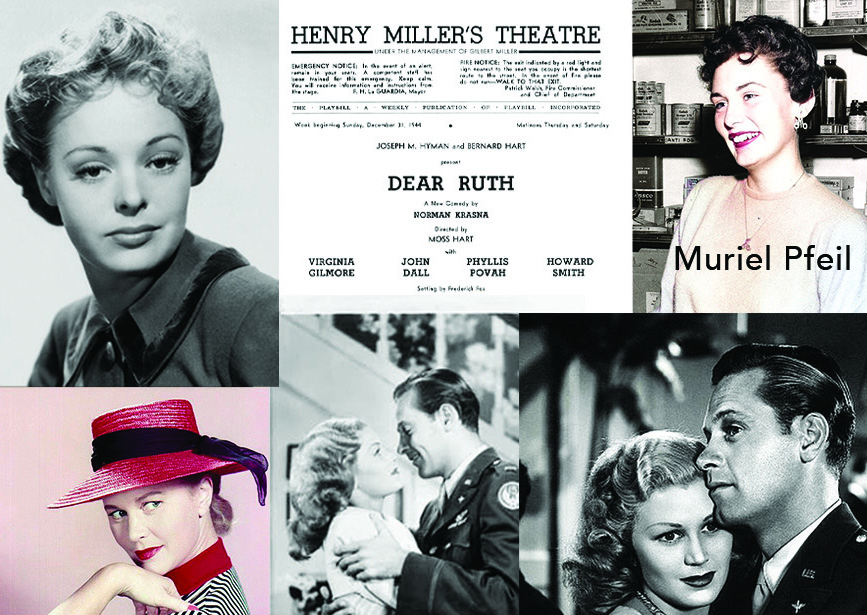
Photo: copyright Anchorage Daily News
Love In The Lead
Then there were the multiple leadership positions she inhabited. An officer in the Rainbow Girls. Chairman of the Alaska Circus Committee. And as a cheerleader, active in community events. In 1952, as a junior, she shared the role of the, quote, “beautiful sister” in a play called Dear Ruth. The next year, 1953 – the year she graduated high school – she was the alternate lead in Our Miss Brooks, a rollicking comedy. Oh, and she was editor of the high school annual, The Anchor. And a recipient of the National Scholastic Press Association award.
The question was not if she could go higher, but how high she could go.
Going Outside
Muriel started the next phase of her life by going to university “outside,” as Alaskans like to refer to the Lower 48. First at the University of Washington in Seattle, where she starred on a sorority ski racing team. And then, by the Fall of 1954, a transfer to the University of Colorado at Boulder. It was a pivotal year, not only for Muriel, but her family.
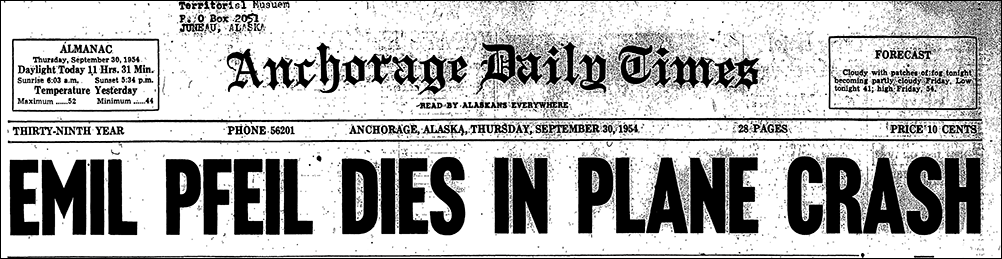
On September 30th of that year, her father Emil and a companion took off from Anchorage’s Lake Spenard in a float plane. They were about to go duck hunting. They never made it past the lake. The plane crashed into dense fog and trapped Emil underneath its pontoons. All attempts to rescue him failed. And there they were. Muriel in Colorado, her sister Caroline in Seattle, at the University of Washington’s nursing program. Out of love and devotion, they both hurried home. Emil’s funeral was only three days later.
Going Way Outside
There were profound changes afoot. Brother Bob, who had graduated from West Point Military Academy and then served at a top military post in Alaska, had just been admitted to medical school. He had his eyes on becoming a medical doctor. That was derailed. He gave up his place at med school and took over the family businesses, becoming, as his mother said, the man of the house.
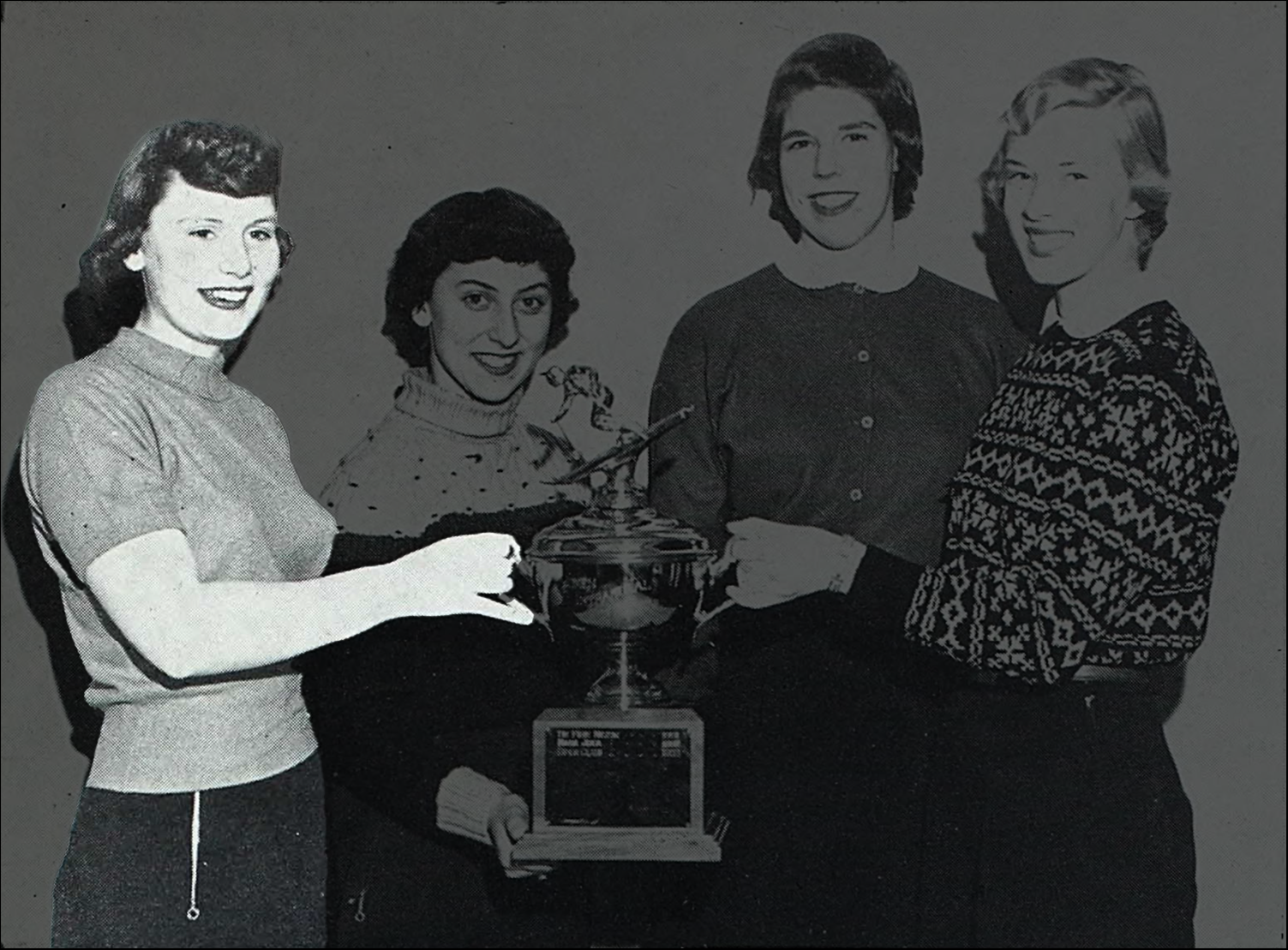
Photo: courtesy University of Washington
Muriel also seemed to take things… ever more seriously. Gone were the ski photos of her freshmen year. At the University of Colorado Boulder, she disappeared into the weeds, emerging with a political science degree three years later. She was more determined than ever. I say that because immediately upon graduating, Muriel took another big leap.
Leaving The Country
Building on her degree, she received an international relations scholarship that took her to the University of Erlangen, outside Nuremberg, Germany. For those of you with a history bent, Nuremberg was home to the 1946 International Military Tribunal, where the Nazis were finally confronted with their war crimes.
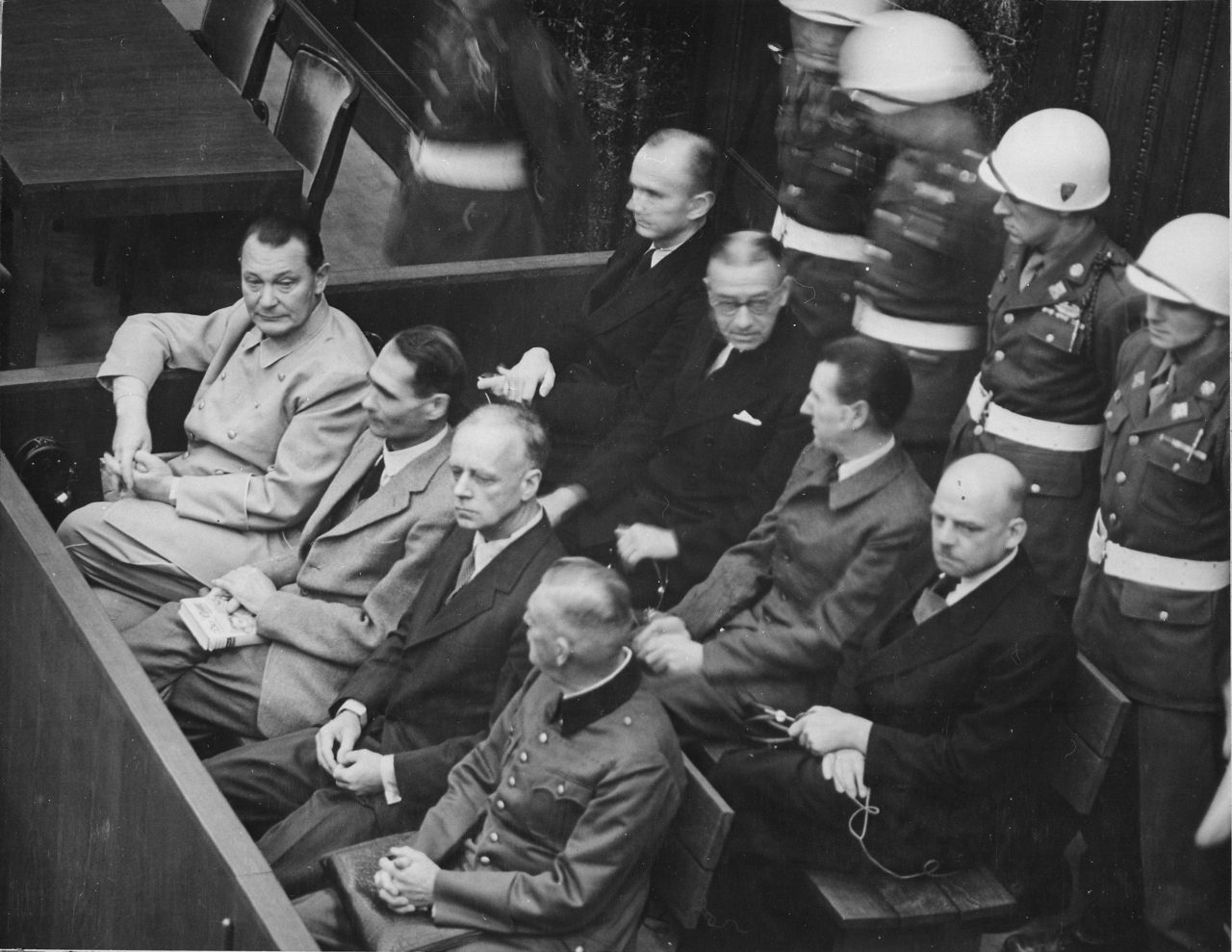
Photo: courtesy Holocaust Memorial Day Trust
And soon enough her sister Caroline — now an Army nurse — got a job at the nearby Landstuhl Regional Medical Center outside Stuttgart, Germany. Theirs was a cross-cultural baptism. Muriel, intrigued by the social aspects of German life, immersed herself in the German language. And, of course, she and her sister skied Europe’s premier ski areas, driving from slope to slope in their Volkswagen bug.
Finding Love
It was not all play and no work, however. When Muriel returned to the United States in 1959, her resume was deep enough to land her a job at the National Planning Association in Washington, D.C. That organization was deep into strategizing the future of Soviet-controlled East Germany. Serious stuff. And there she was, in the midst of it.
But as in much of her life, there was an unexpected twist awaiting her. Back in Anchorage during the summer of 1961, she got a job at the Brad Phillips Travel Agency – and realized it was love at first sight. But she didn’t jump. Not just yet. She took a side trip… A job with Radio Free Europe in Munich. Back in Anchorage, she leapt back to that earlier thought, now deciding to form her own travel agency. Opened in 1963, she called it Professional Travel Service.
And, look, let’s be very specific here. Starting her own business, in her own space, was not something just any-old-body could do. She had something not available to everyone else. It’s called “generational wealth.”
That said, this is also where she meets her very next twist of fate.
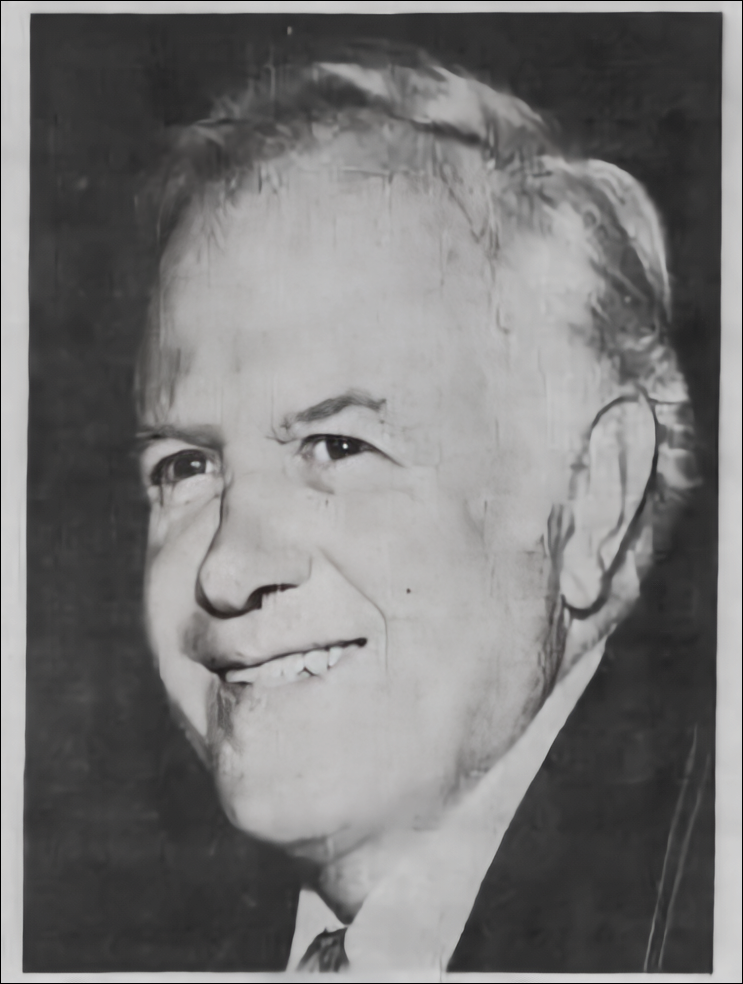
Photo: copyright Honolulu Daily News Advertiser
Choosing an office building in downtown Anchorage, in close proximity to the city’s biggest, most beautiful hotel, The Hotel Captain Cook… Gifted her a landlord named… Neil Mackay. Mackay not only owned the building – one of several he owned, in fact – he had an office there, a law office. So suddenly they were in each other’s company. There’s some flirtation. I mean, do I have to imagine this? There’s some flirtation going on?
Which was rich, because Neil Mackay was married.
The Book: Kill Brother, Kill Sister
Kill Brother, Kill Sister is available at Amazon, Barnes & Noble and other fine bookstores (paperback and ebook).
Copyright Leland E. Hale (2026)