Getting There Is Half The Fun
After the relative boredom of the Guam-bound flight — and the rush of an airport at the crossroads of the west Pacific… There’s The Milk Run, which is anything but boring. Most of the time, you descend to a narrow strip of land — perched at the very edge of “terra firma” — and hope you land without incident. The force of the brakes and the flaps can be be absolutely… Scary. The facilities at your destination? Absolutely of their era. People cross the tarmac to board and exit the airplane.
Then you take off for the next island destination, for more of the same. Wash, rinse, repeat. This was the only scenario available to Rodger Cotting and his “son” — the same one followed by the investigators on their tail.
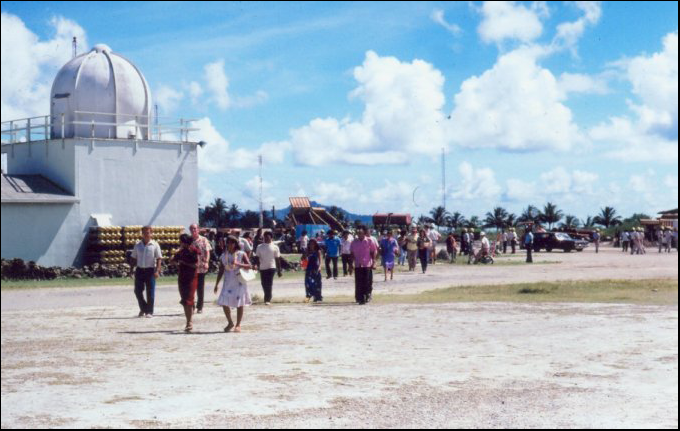
The uniqueness of this route is immediately apparent at check-in. Passengers are issued four distinct boarding passes, one for each leg to the Marshall Islands capital, Majuro… [The] jet is modified to handle the challenges of short, remote runways and volatile weather. It carries a minimum of four pilots, a dedicated aircraft mechanic, extra life rafts, and a cache of spare parts…
The first landing provided a moment of high drama. After a stunning visual approach, the aircraft’s brakes were deployed with full, necessary force to stop on the short runway of [the Chuuk] airport, originally built by the Japanese in 1942.
Josh Cahill, Conquering the Pacific’s “Milk Run,” 24 October 2025
Chuuk (Truk)
Once known as Truk, it reverted to its traditional name after liberation. Captured by the Japanese shortly after the attack on Pearl Harbor, it subsequently served as a major Naval base for Japanese operations during WWII. Because of that, the Allied powers served Japanese forces on Chuuk with a heavy dose of their own medicine. Although most of its warships were at sea, many support vessels remained in port. The Allied attack took out three airfields, several heavily fortified facilities, dozens of planes, and more than 70 ships. The majority of those sunk were cargo ships and submarine tenders. And now?
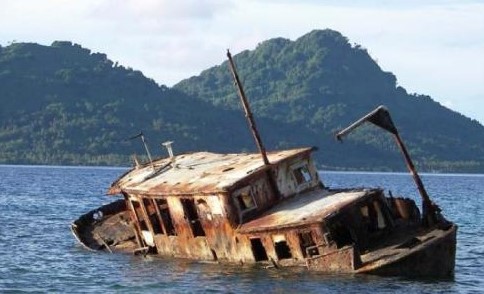
Chuuk is a recognized capital in the world of wreck diving. Many of the ships are easy to reach. Like, less than 100 feet down. “John” and Rodger Cotting, however, kept going. Not too far behind them were the Honolulu detective and his Chamorro attorney. Except, of course, those two had important business in Saipan, the seat of Micronesia’s highest court. There was no use heading for Majuro without an order confirming Steve Goodenow’s claim on Scotty. And yes, the Saipan side-trip meant a delay through which one or both of their targets could slip away, sight unseen.
Pohnpei (Ponope)
Pohnpei is the largest island in the Republic of the Marshall Islands, with an area of 129 sq mi and a high point of 2,566 ft. It’s the most populous island in the Marshalls, with 36,832 people. For most visitors, moreover, it is the archetype for tropical islands. There are reefs and a mountainous, jungle-covered interior. On the east coast, ancient ruins include basalt temples and burial vaults.

One highlight? The Kepirohi Waterfall, which tumbles over large basaltic rocks into a tempting tropical pool. Outside the town of Kolonia, old Japanese Army guns sit near Sokehs Rock, itself a dramatic cliff. Pohnpei is wet. As in about 350 inches of annual rainfall.
“John” and Rodger did not tour this island, nor did Steve Goodenow and Ramon Villagomez. At least not then. It played a large — and dramatic — role later on. We’ll get to that, I promise.
Kwajalein Atoll
At just six square miles, Kwajalein is a blip in the Pacific. Except… except that it has served as a major Army base since the 1950s, mainly as a staging area for missile tests. And because its landing strip is actually part of that military base, tourists cannot disembark here. For that, one has take a boat to nearby Ebeye Island. They love boats in these parts.
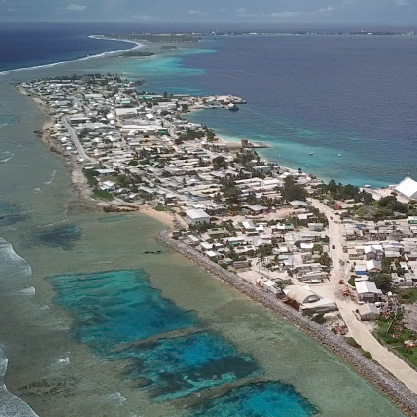
It is Ebeye that’s home to the Emergency Operations Center for RMI (Republic of the Marshall Islands) and other facilities, including schools, health facilities, stores, and a hotel, along with residential structures. It has some docks but no airstrip, and is connected by a causeway to Loi, Shell, and Gugeegue islands to the north. At this hop, “John” and Rodger stayed on the airplane. So did their pursuers.
Majuro
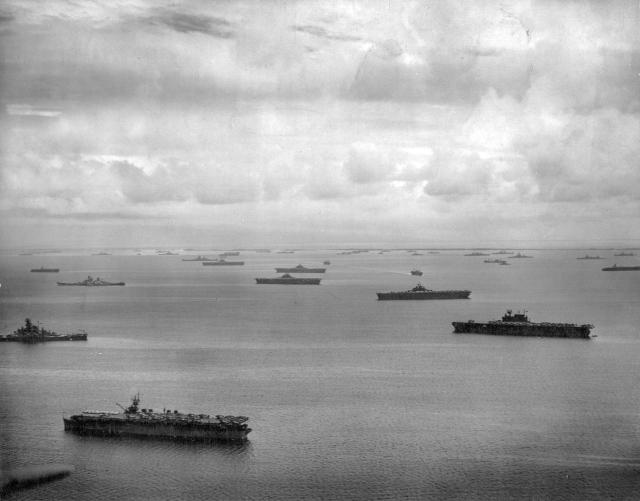
Majuro is many things to the Marshall Islands. It’s the capital. Holds the largest city. Is surrounded by an atoll so large that it once held vast numbers of the U.S. Pacific Fleet. So large, in fact, that at one point in 1944 it held 644 ships, all of them being staged for major battles in the Pacific theater.
Today, Majuro remains vastly important. Its Catholic Church borders on epic. Its commercial strip is as good as it gets in the middle of the Pacific. And at the time “John” and Rodger Cotting were visiting, there were loads of Americans working there. American diplomats. U.S. lawyers. Western entrepreneurs. Remember what Neil Mackay said? That there were real estate options opening up. Good time to grab a piece of paradise.
Another Day
By the time Goodenow and Villagomez landed in Majuro, days had passed, their skin was sagging off their bones… and that even wasn’t the worst part.
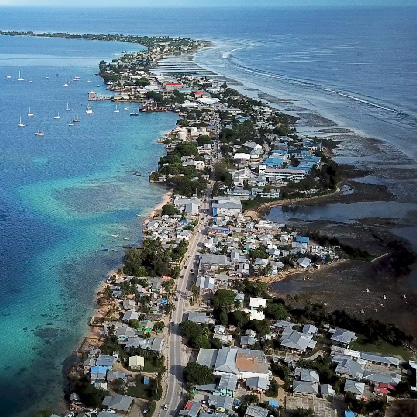
Because he was a Trust Territory citizen, Ramon went through the Transient Section and immediately cleared Customs. He nevertheless waited, watching Goodenow’s progress through the Customs Clearance section.
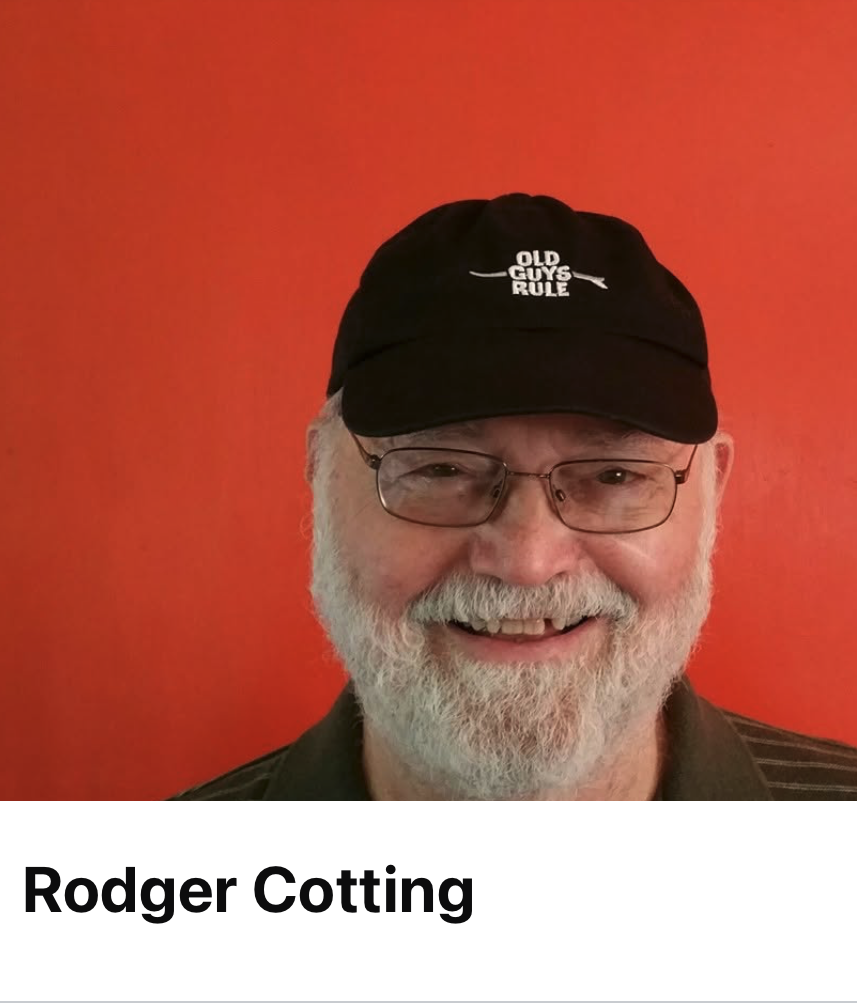
After filling out a tourist visa, Goodenow decided to make his first move. He opened a folder and showed the immigration inspectors photos of Scotty. Asked if they’d seen him, they said, “no.” Now it was time to show identification; Goodenow pulled out his passport. From behind him he heard a booming voice, saying, “I want to see this passport.” The voice belonged to an imposing Caucasian man — Goodenow variously described him as 6’1″ or 6’3″, weighing 250 pounds — “or more” — and wearing glasses. Steve Goodenow turned and asked the man’s identity. “Who are you?”
Not A Friendly Reception
The answer was gruff, unfriendly. Goodenow was led to believe the man was head American Consul in Majuro. That his name was Rodger Cotting. Believing — perhaps naively — that the High Court order granting him full custody of Scotty would ease him through, Goodenow brought it out for show and tell. Cotting grabbed it, glanced through it, forced Goodenow to snatch it back. Things were resolved only after Ramon Villagomez intervened — not without his own rough treatment. Ramon was polite but firm as he told Cotting he had no right to question him. The man backed off.
Thinking themselves free of Cotting’s harassment, the two of them met their local contact, Majuro Police Chief Felix Cabrera, and quickly exited to the airport bar. Rodger Cotting soon followed, immediately placing himself in an adjoining booth. There he was joined by a local named Curt Pinho, an operations manager for Tradition Air Service in Majuro. In Goodenow’s telling, it soon got pretty spicy.
Pinho and Cotting proceeded to make various comments, such as the fact that Scotty had gone out on Air Naru and was no longer there. They made many jokes and soon we left the airport, leaving Cotting and Pinho at the bar. I found that Roger [sic] Cotting was an abusive man, spoke in very crude language, made what I considered to be inappropriate remarks to the waitress. It was obvious that Cotting knew that we were on our way and was expecting us.
Steve Goodenow, Memo To File, May 1, 1978
P.S. — A Tantalyzing Clue
In a previous installment, I mentioned an air passenger who sat next to a young man with a name tag that declared his name was “Scotty.” This witness was named Maria J. Knyff. She had all the credentials of a reliable witness.
I, Maria J. Knyff... am a citizen of the United States, presently residing in Saipan, Northern Mariana Islands, and have resided within the Trust Territory of the Pacific Islands for the past eleven (ll) years. I am over the age of majority and married to Andrian Knyff, an employee of the Trust Territory government. My present address is Saipan, Mariana Islands.
Knyff told authorities that, “on that same flight, I was seated next to a Caucasian boy, approximately five years of age, with blondish hair, who was wearing a name tag on his left chest which read, “Hi! My name is Scotty.” The boy and I had hours of conversation thoughout the approximately five-hour flight. The boy was nice looking, attractive, very sociable and could carry on a conversation.”
On that basis, Knyff was shown two photos of Scotty Mackay. She was asked whether the boy in the pictures looked like the boy on her flight. “After looking at the pictures,” Knyff said, “I discovered that the boy in the pictures looked the same as the boy seated next to me on the flight mentioned above. They have the same hair-cut and hair color; the same height, the same build, the same race, and the same face.”
But was it him?
The Book: Kill Brother, Kill Sister
My latest book is available at Amazon, Barnes & Noble and other fine bookstores (paperback and ebook).
Copyright Leland E. Hale (2026)