Around The Horn
No, we’re not done. Not even close. We’ve got some unfinished business to care for… Some missing details concerning our “cast of characters.” We’ll start with Judge Alvin H. Brown, he of the tragic ending in a place very far from home. The first thing to know, I suppose, is his distinguished pedigree. His great-grandfather, Obadia Bruen Brown, was a founder of George Washington University in Washington, D.C. His grandfather, Thomas Bruen Brown, was a Los Angeles District Attorney. And his first cousin was… Gen. George S. Patton, Jr. Yeah, THAT General Patton. Which means that…
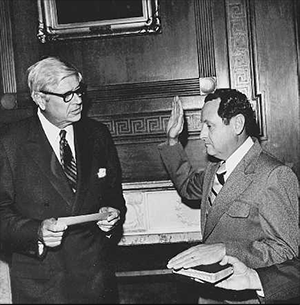
A lot was expected of the man. You know, pedigree and all that. Indeed, Judge Brown had a distinguished record on his own. He’d been a Combat Officer during the WWII campaign in the Philippines. Was awarded the Bronze Star for his service. Became Judge advocate for the 40th Infantry Division during the Korean War. Most importantly, from this writer’s perspective, he had developed a keen appreciation for the indigenous justice system in Micronesia.
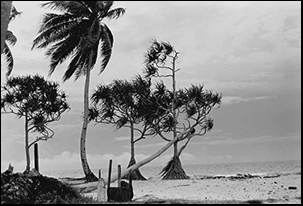
(Courtesy Pacific Collection, UManoa-Hawaii)
Judge Brown spoke admiringly of Micronesia's "family apology" system, under which one who commits a crime against someone can wipe it out by apologizing to the victim and his family. "If the apology is accepted, then a gift-giving follows, wiping out the crime," he said. "In such cases, you ask yourself what business has the government?" "Alvin H. Brown Jr. Succumbs At 60," San Diego California Union, March 1978
Also worth noting were reports out of Micronesia about the alleged effect of the Mackay case on Judge Brown. We’re talking personal impact here. Quoting contemporaneous new sources, there was something noticeably wrong with Brown as the case unfolded. To some observers, Brown seemed almost done for. “According to Ray Villagomez, a Saipan-based lawyer with the Guam law firm of Ching, Rosenzweig and Boertzel, […] Brown was “shaking visibly while conducting the airport hearing.” [Pacific Daily News, Friday, March 24, 1978]
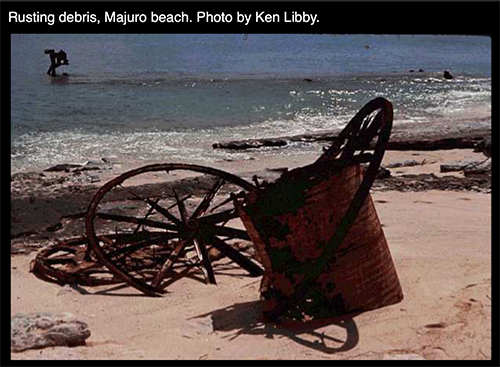
Cheerleaders
Neil S. Mackay, meanwhile, seemed to have no shortage of cheerleaders. One was the wife of his Hawaii attorney, Mrs. Tuva Rodrigues, who noted in an Anchorage Daily News story that her husband’s office had “received several calls from Alaskans in Hawaii who have read recent stories on the case.”
"They want to know how they can help," she said. "They have seen the boy with his father and think it's a beautiful relationship," Mrs. Rodrigues added. "We're going to rally all the forces to get the boy and his father together, as they should be."
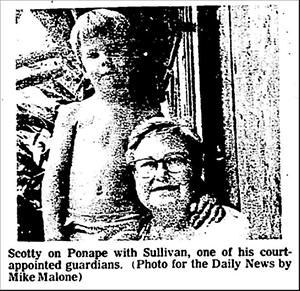
But Neil Mackay’s biggest cheerleader was, and remained, Mrs. Jean Sullivan. In a news story — sob story? — for the Micronesian Independent, Sullivan went into a full-throated defense of the man. Yes, it bordered on idolatry, but Sullivan’s exhortations had the ring of sincerity. She knew the child. The child knew her. She was, in fact, a trusted presence.
"The whole affair has been unfairly tried in the newspapers and on TV. With all the sensationalism about the mother's death, the public and the courts have already made up their minds," Sullivan reported. The news story then added that, "the public was told that Scotty's life was in danger if he stays with his father." Micronesian Independent, Majuro, Marshall Islands, March 31, 1978
Sullivan told that same newspaper that the purpose of bringing Scotty to the Marshall Islands was to, quote, give the boy “peace of mind.”
“This is something Scotty has not enjoyed since his mother met a violent death two years ago,” she said. “The authorities are not thinking of Scotty’s well-being. They are only interested in punishing his father for trying to protect him.” Micronesian Independent, Majuro, Marshall Islands, March 24, 1978
Cottings: Contempt of Court?
Meanwhile, a High Court Judge in the Marshall Islands — Judge Robert A. Hefner — had the temerity to think he’d been exquisitely clear in his orders commanding the return of Scotty Mackay to Alaska. His most important action? Commanding authorities to find Scotty and place him in the custody of Steve D. Goodenow. It was not an idle command; something had to be done and Hefner’s order was explicit in every regard:
4. Any person who shall interfere or prevent Mr. Goodenow from taking custody of the minor Scotty, is subject to contempt of this Court. ENTERED on this 16th day of March, 1978.
Charges Specified
In case you’re wondering, Judge Hefner made good on his demand. In a letter from Assistant D.A. A. Rodman Johnson, dated April 11, 1978, the realities of the Cotting’s involvement in Scotty’s Micronesia sojourn became increasingly clear. Here’s Johnson’s letter to the Ponape District Attorney:
SUBJECT: In the Matter of Neil (Scotty) P. Mackay, a Minor

For the past three weeks the MBI [Micronesia Bureau of Investigation] has been conducting an investigation into the circumstances surrounding the highly publicized chain of events which took place between Honolulu and Saipan involving the referenced minor male and the actions of a number of residents of the Trust Territory, including Trust Territory officials who were directly involved. At the request of the Chief of the MBI, I called Associate Justice Hefner on Monday, April 10, 1978, at 7:45 A.M. Judge Hefner informed me at that time that he had determined to proceed with a criminal contempt of court hearing requiring Mr. [Rodger Cotting] and his wife, [Marie Cotting], to show cause why they should not be held in contempt of court.
Charges Brought
The Johnson letter was not idle speculation. Charges against the Cottings would soon follow. This case was far from over.
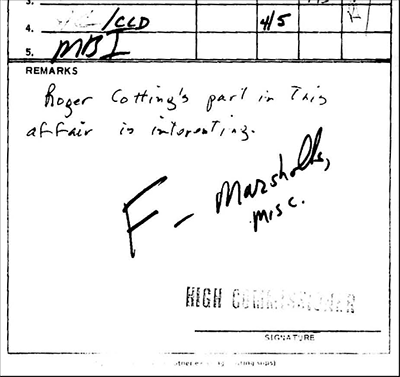
Judge Hefner believes that the action of the Cottings in secreting the minor child on Majuro and subsequently on Likiep was done with knowledge of the court order relating to the custody of the minor child. This is the basis of the contempt action. The Office of the Attorney General, as special counsel to the High Court, must determine, inter alia, who had knowledge at what point in time of which court orders. The sequence of events between the 11:30 P.M. landing at the Majuro airport on March 16, 1978 and the flight of the minor child to Likiep on March 17, 1978 is crucial.
The Book: Kill Brother, Kill Sister
My latest book is available at Amazon, Barnes & Noble and other fine bookstores (paperback and ebook).
Copyright Leland E. Hale (2026)