“It’s Either Extremely Clear… or Impossible”
Resident Evil
This blog has never been shy about pointing out the human capacity for evil. If our species were so kind and considerate, doubtless Moses could have skipped that trip to Mount Sinai. The news machine could skip one of its foundational mantras, the one that declares, “if it bleeds, it leads.” The true-crime genre, which occupies way too much of my time, would be but a faint glimmer from an earlier, prehistoric era. Alas, it’s not to be. Just think about the other challenges… Like stupidity, which is always in a race for the lead.

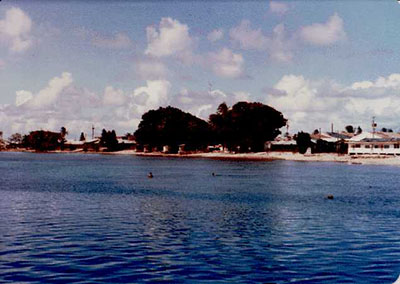
It is unfortunate, then, that this dissertation on Kill Brother, Kill Sister sustains the notion of deep rooted evil. We see evil laid upon evil. Scotty? Lost in the noise. Communication fractured. And thus, by extension, we also see many of the characters that cross this page — especially Neil Mackay and his enablers — as part and parcel of an underlayment that challenges us all. This is the angst that lingers. But what if… There was something else? A contributing factor, as it were? Something almost… Banal? [See also: Stupidity, above]
Well Meaning Fools
Imagine, if you will, a cast of “good samaritans” who embark on a mission to protect a child from the very notion of evil. They’re well meaning. After all, a child is being taken from his father. And… Here’s what they’re up against. First off, there’s the “state,” distant and amorphous. During the period covered here, that distant “state” was a daily experience. It was — and had long been — a government of “outsiders.” No longer Chamorros, but… First the Germans, then the Japanese, then the Americans. Also: a military takeover, as in nuclear bomb testing on Bikini Atoll. Plus, available land was strained by Army bases (Kwajalein). Almost all foodstuffs were (are) imported. In cans. And, adding insult to injury, there was a recurring lack of connection to — and communication with — the rest of the world. That last one comes with the turf. Micronesia is spectacularly isolated.
Yes, it’s “improved” now [1]. In the late 70s? Forget about it. Let’s look at the bare logistics. Guam to Majuro is almost 2,000 miles. The straight-line distance from Majuro to Australia is approximately 2,690 miles, depending on your Australian destination. Hawaii isn’t much better, at 2,280 miles. And it’s not like you can hop in your car…
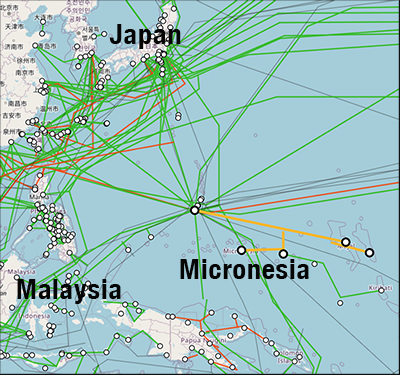
The surrounding constellation of land is mostly uninhabited islands — or less. Think atolls, barely rising above sea level. Who in hell is going to expend millions (billions) of dollars to build, say, a network of fibre-optic cables to these barren lands? Can you say, “nobody?” Ok, almost nobody. Changing that only took… Forty years. Forty long years from the time of Scotty Mackay’s initial visit in 1978.
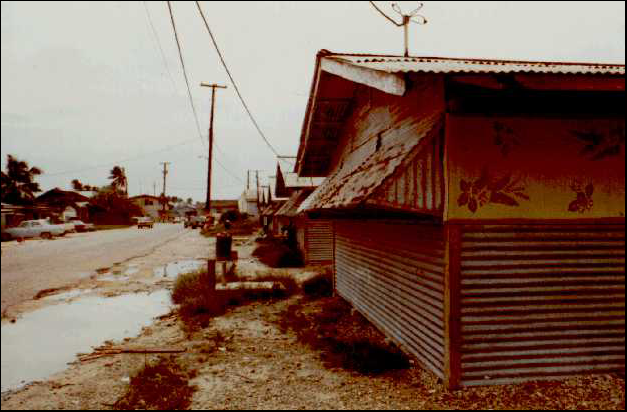
Complaints? Early and Often
Steve Goodenow was acutely aware of the communication challenges in the Marshalls. Indeed, he routinely suffered through them. And, given the situation on the ground, he was not alone. So, too, were the parties supporting Neil Mackay’s machinations. We take our cues, however, from Goodenow. He was perhaps most acutely aware of the difficulties. Here are a few examples:
“I should start to make some mention of communication. Communications with Honolulu and Guam were nearly impossible. It was finally determined that the best way to contact Honolulu would be by using the Weather Station which is about 2 miles from Felix [Cabrera’s] house.” Source: Marshall Islands-Hawaii: Lawyers Aid, Inc., Steven Goodenow
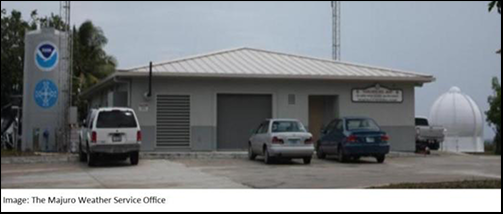
At the Weather Station
“By going to the Weather Station, one could use the Weather Station’s communication network to contact Kwajalein. Once contact was made with Kwajalein, which was about 300 miles away, contact could then be made through a satellite hookup with the Mainland. Depending on the weather conditions, communication was either extremely clear or it was impossible. I would rate it at about SO-SO. Some communications with Honolulu were extremely good, others were not worth the trouble to make them.” Source: Marshall Islands-Hawaii: Lawyers Aid, Inc., Steven Goodenow
“I believe that Mackay selected Majuro because 1) A foreign destination that would not require a passport (Scotty Mackay did not have a passport) ; 2) His contact with Roger Catting [sic] which had been established through the Sullivans; 3) The lack of the Uniform Custody Child Act in the Trust Territories; 4) The lack of communication with Hawaii and/or Alaska; 5) There was extreme pressure being applied to Mackay through our location efforts. Mackay needed a safe place to hide.” Source: Marshall Islands-Hawaii: Lawyers Aid, Inc., Steven Goodenow
“There very well may have been some contact between Brook Hart, the appointed attorney for Scotty in Honolulu, and the Trust Territory Government in Saipan. I am not too aware of what was happening because of the communication problem. However, it is my understanding that Saipan was aware of the situation and most likely was aware that I was proceeding down to Majuro from Saipan.” Source: Marshall Islands-Hawaii: Lawyers Aid, Inc., Steven Goodenow
Communication Breakdown
For the most part, the expansion of global communications networks has been steady and unbroken. Enough so that most of us in the so-called “developed world” take it for granted. There’s good reason for that: The first major cross-Channel link between Great Britain and Europe went live in 1851, followed by the first transatlantic cable in 1858. By 1900, a global network of cables connected major cities, commercial centers and critical military sites [2].
By the 1960s, that communications network had moved to the skies. The first commercial communications satellite, Telstar, was launched in July 1962. The first geosynchronous satellite — Syncom 2 — was launched from Cape Canaveral on July 26, 1963. Its primary purpose? Television transmission. [3] Next came fiber-optic undersea cables, the first of which were “planted” across the Atlantic ocean in 1988 [4]. By 2022, estimates had it that 99 percent of global communications used undersea cables, with a network of 400 individual cable systems and approximately 750,000 miles of fiber.
Missing Pieces
Still missing from that progress, however, were the Marshall Islands. Several challenges contributed to the vacuum. Extreme geographic isolation, for one. Followed by the high cost of power grids. Oh, plus sparse population and frequent infrastructure disruptions [5]. And that, my friends, was the state of Majuro’s communications infrastructure in the late seventies, when Neil S. Mackay and Rodger Cotting conspired to bring Scotty Mackay to Majuro.
They had consciously — and very purposefully — entered The Void. As a result, it is more than plausible that Scotty’s “caretakers” were blissfully unaware of the truth, much less the very pressing legal challenges occurring in Alaska and Hawaii. Lacking that, they were taking no chances. A promise is a promise and all that. For the Cottings, that meant one thing: Protect Scotty until his father comes to take him back. Unfortunately for them, reality intervened before that could happen. Busted.
[1] Except that Marshallese are leaving in droves. Too many challenges: few economic opportunities and rising seas at their doorsteps.
[2] The security of subsea cables: an enduring naval challenge, Maritime Foundation, December 1, 2022
[3] Television tests with the syncom ii synchronous communications satellite, NASA, July 1, 1965
[4] ibid, Maritime Foundation, 2022
[5] Intelsat Connectivity Transforming Lives and Livelihoods in the Marshall Islands, Broadband Commission, September 15, 2023.
The Book: Kill Brother, Kill Sister
My latest book is available at Amazon, Barnes & Noble and other fine bookstores (paperback and ebook).
Copyright Leland E. Hale (2026)